Every condominium community thrives on transparent communication and active member participation. A well-structured condo annual meeting notice template is not just a formality; it’s a critical tool for legal compliance and fostering a strong, engaged community. Without a proper notice, your annual meeting could face legal challenges, and key decisions might be invalidated.  This article will guide you through the essential components of an effective notice, provide a customizable condo annual meeting notice template, and share best practices to ensure your next annual meeting is a resounding success. Property managers, board members, and unit owners will find invaluable resources here to streamline their administrative processes and maintain good governance.
The Importance of a Compliant Annual Meeting Notification
Issuing a legally sound annual meeting notice is paramount for any condominium association. This official communication serves several vital purposes, ensuring fairness, transparency, and adherence to governing documents. Failing to provide proper notice can lead to disputes, invalidate meeting outcomes, and expose the association to legal liabilities.
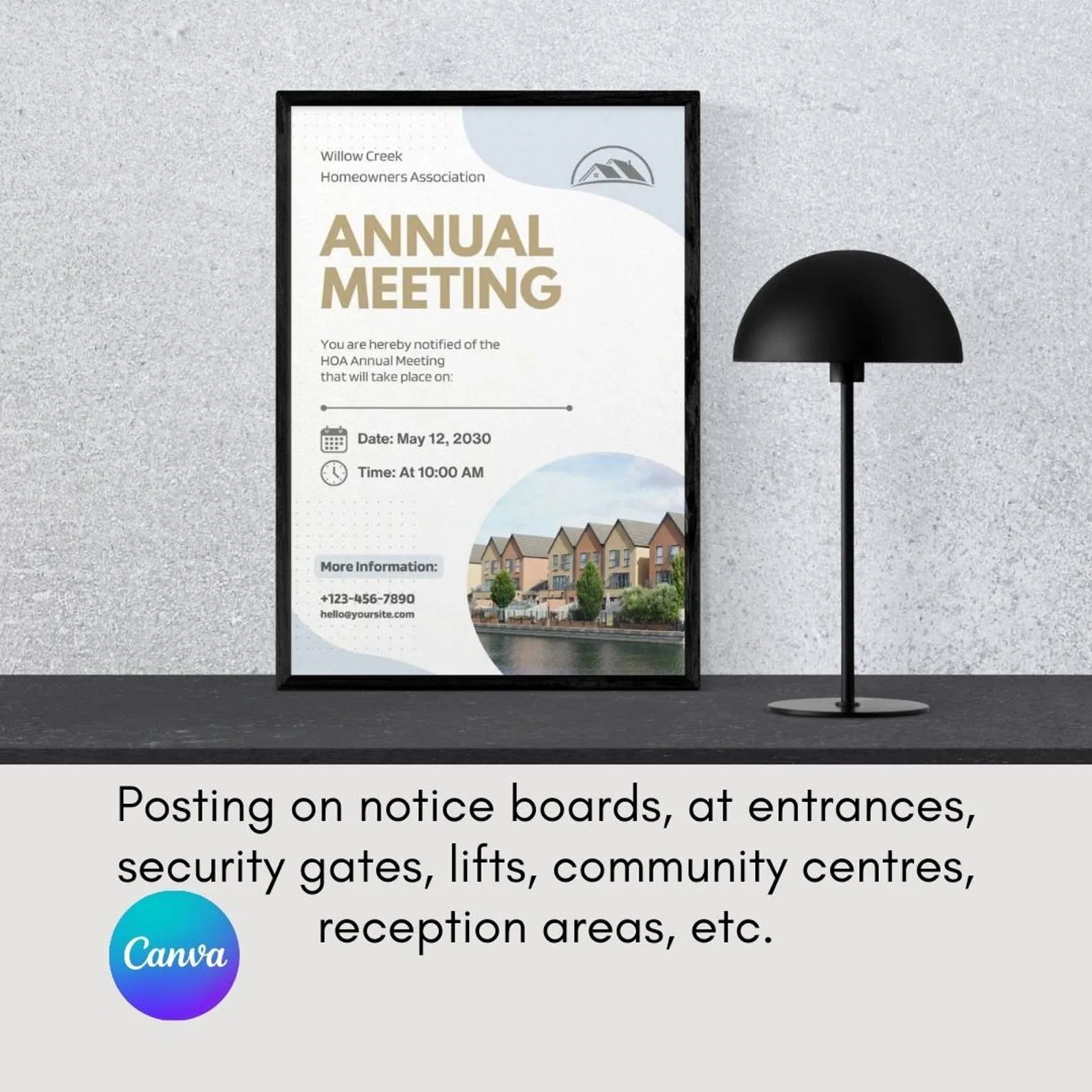
Most condominium bylaws and state statutes dictate specific requirements for annual meeting notifications. These often include the method of delivery, the minimum notice period, and the essential information that must be included. Adhering to these regulations protects the board and ensures all unit owners have an equitable opportunity to participate. A well-drafted condo annual meeting notice template helps to standardize this crucial process, preventing omissions and errors. Key elements that are typically mandated for an effective annual meeting notification include:
- Meeting Date and Time: Clearly specify when the meeting will commence.
- Meeting Location: Provide the exact physical address or virtual meeting link.
- Purpose of the Meeting: Outline the main items on the agenda, such as election of board members, budget approval, or proposed bylaw amendments.
- Agenda Items: A detailed list of topics to be discussed and voted upon.
- Quorum Requirements: A reminder of how many unit owners (or proxies) must be present for the meeting to proceed legally.
- Proxy Information: Instructions on how unit owners can assign a proxy if they cannot attend in person.
- Contact Information: Who to contact for questions or further information regarding the meeting.
- Relevant Attachments: Such as proposed budgets, financial reports, or candidate statements.
Understanding these components ensures your communication is not just informative, but also fully compliant with all legal and association specific mandates.
Crafting Your Condo Annual Meeting Notice Template
Having a reliable and customizable condo annual meeting notice template is indispensable for property managers and HOA boards. This template provides a structured format that can be easily adapted to your specific association’s needs, while ensuring all critical information is included. It helps to maintain consistency in communication year after year.
Below is a comprehensive sample of a condo annual meeting notice template. This example can be copied, pasted, and modified to suit your condominium’s unique bylaws and state regulations. Remember to fill in all bracketed information with your association’s details. 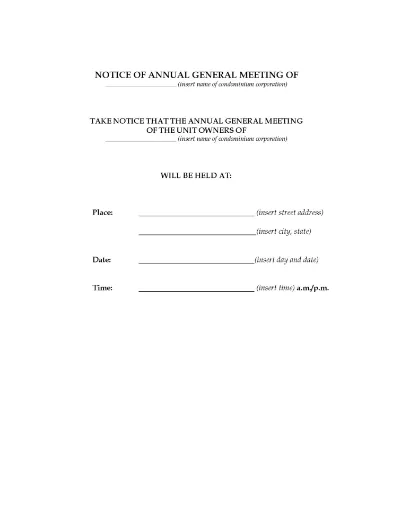
Official Notice of Annual Meeting for [Condominium Name]
Date of Notice: [Date of Notice, e.g., October 26, 2023]
To: All Unit Owners of [Condominium Name]
Dear Valued Unit Owners,
Please take notice that the Annual Meeting of the Unit Owners of [Condominium Name] Homeowners Association will be held as follows:
- Date: [Date of Meeting, e.g., November 26, 2023]
- Time: [Time of Meeting, e.g., 7:00 PM EST]
- Location: [Physical Address of Meeting, e.g., Community Clubhouse, 123 Main Street, Anytown, USA 12345 OR Virtual Meeting Link: [Link to Virtual Meeting Platform] (e.g., Zoom, Google Meet)]
The primary purposes of this Annual Meeting are:
- To elect [Number] members to the Board of Directors for a [Term Length, e.g., two-year] term.
- To review and approve the Association’s financial statements for the fiscal year ending [Date, e.g., September 30, 2023].
- To present and discuss the proposed budget for the upcoming fiscal year [Year].
- To discuss any other matters that may properly come before the membership.
Proposed Agenda:
- Call to Order
- Proof of Notice
- Establishment of Quorum
- Approval of Prior Meeting Minutes (if applicable)
- President’s Report
- Treasurer’s Report and Budget Presentation
- Election of Board Members
- Old Business
- New Business
- Adjournment
Board of Directors Election:
There are [Number] open positions on the Board of Directors. Nominees for these positions are [List Nominee Names, if known, e.g., Jane Doe, John Smith, or state “to be nominated from the floor”]. Unit owners interested in serving on the Board are encouraged to attend.
Quorum:
A quorum, consisting of [Percentage or Number] of the total voting interests, must be present in person or by proxy for the transaction of business. Your attendance is crucial to meet this requirement and ensure decisions can be made.
Proxies:
If you are unable to attend the meeting, you may assign your voting rights to another unit owner or an attending individual via a written proxy. A proxy form is enclosed with this notice [or can be downloaded from [Website Link]]. Please ensure completed proxy forms are submitted to [Board Secretary/Property Manager] by [Date and Time, e.g., November 25, 2023, 5:00 PM EST].
Attachments:
- [Proposed Budget for Fiscal Year [Year]]
- [Candidate Statements/Biographies]
- [Proxy Form]
- [Minutes from Previous Annual Meeting (if applicable)]
We look forward to your participation and valuable input at the Annual Meeting.
Sincerely,
The Board of Directors
[Condominium Name] Homeowners Association
Contact: [Property Manager Name/Email/Phone Number]
“` Remember to review your association’s specific governing documents and local laws to ensure this general template aligns with your particular legal obligations. Customizing the specific agenda items and attachments is crucial for each annual meeting.
Best Practices for Notice Distribution and Record Keeping
Beyond just drafting an excellent condo annual meeting notice template, the method and timing of its distribution are equally critical. Associations must adhere strictly to the notice period specified in their bylaws, which is often between 10 and 30 days prior to the meeting. Sending the notice too late or through an unauthorized channel can invalidate the meeting, regardless of how well the document is written.
Common methods of distribution include first-class mail, hand delivery, or email if unit owners have consented to electronic communication. It is always wise to use methods that allow for proof of delivery, such as certified mail or email receipts, especially for important communications like the annual meeting notification. Maintaining a record of when and how notices were sent is crucial for legal defense if any disputes arise.
Moreover, clearly communicating the agenda, election procedures, and proxy instructions helps maximize unit owner engagement. Providing a clear call to action and easy-to-understand information encourages more members to attend, either in person or by proxy. This proactive approach strengthens community governance and participation, leading to more productive and legitimate meetings.
Ensuring every unit owner receives a timely and comprehensive condo annual meeting notice template is fundamental to transparent governance. Utilizing a robust template and following best practices for distribution simplifies administrative tasks and minimizes legal risks. By prioritizing clear communication and adherence to legal requirements, condominium associations can foster a more engaged and harmonious community. This commitment to proper procedure ultimately strengthens the association’s foundation and ensures its ongoing success.