The dream of owning a business is a powerful one, often fueled by passion and entrepreneurial spirit. However, securing the necessary capital can be a significant hurdle for many aspiring business owners. Traditional bank loans often come with stringent requirements and lengthy approval processes, making the acquisition path challenging.
This is where owner financing, also known as seller financing, emerges as a flexible and often advantageous alternative. It allows a seller to directly finance the sale of their business to a buyer, bypassing conventional lenders. Understanding and utilizing a robust owner financed business contract template is crucial for both parties to ensure a smooth and legally sound transaction. This article will delve into the benefits, essential components, and a sample structure for such a vital document.
Navigating the Advantages of Seller Financing Agreements
Seller financing represents a unique opportunity for both buyers and sellers in the business acquisition landscape. It addresses common pain points associated with traditional lending, opening doors that might otherwise remain closed. Properly structured, these agreements can facilitate transactions that benefit everyone involved.
Benefits for Business Buyers
For buyers, owner financing can significantly ease the entry into business ownership. It often requires a lower upfront cash payment compared to bank loans, preserving working capital for immediate operational needs. This reduced barrier to entry allows more individuals to pursue their entrepreneurial aspirations.
The closing process for owner-financed deals is typically much faster and less complex than traditional financing. Buyers can avoid extensive paperwork, credit checks, and the bureaucratic hurdles of large financial institutions. This efficiency can be a significant advantage in competitive markets.
Furthermore, when a seller finances the deal, they often have a vested interest in the business’s continued success post-sale. This can lead to valuable mentorship, training, and ongoing support from the former owner, which is rarely a component of a bank-financed transaction. The seller’s willingness to finance can also signal their confidence in the business’s viability.
Benefits for Business Sellers
Sellers, too, reap considerable rewards from offering financing. It broadens the pool of potential buyers significantly, attracting individuals who might not qualify for traditional loans. This expanded market can lead to a quicker sale and potentially a higher selling price for the business.
Another key advantage for sellers is the potential for tax benefits. Receiving payments over time can allow for the deferral of capital gains taxes, spreading the tax liability across multiple years. This can result in a more favorable tax position compared to a lump-sum payment.
Finally, owner financing provides sellers with a steady stream of income over an extended period. This income can be a crucial component of their retirement planning or an investment in their next venture. It offers financial security and predictability, making the transition out of business ownership smoother.
Essential Components of an Effective Owner Financed Business Contract Template
A well-drafted owner-financed business contract is the bedrock of a successful transaction. It defines the rights and obligations of both the buyer and the seller, mitigating risks and preventing future disputes. This comprehensive document must clearly outline every aspect of the sale and the financing arrangement.
Key Sections for Legal Protection
The contract must begin by identifying all parties involved, including their legal names and addresses. A precise description of the business being sold, including its assets, liabilities, and goodwill, is also paramount. This sets the stage for the entire agreement.
Crucially, the document must detail the full purchase price and the complete financing terms. This includes the initial down payment, the financed amount, the interest rate, the payment schedule (e.g., monthly, quarterly), and the total term of the loan. A separate promissory note, detailing the buyer’s promise to repay, is usually incorporated by reference or attached.
A security agreement is another vital component, outlining the collateral the seller can claim if the buyer defaults on payments. This often includes the business assets themselves. The contract should also clearly define what constitutes a default and the remedies available to the seller in such an event, ensuring legal protection. Representations and warranties, where both parties attest to certain facts about the business and their capacity to enter the agreement, are also standard. Furthermore, a non-compete clause might prevent the seller from opening a similar business nearby, protecting the buyer’s investment. A well-crafted owner financed business contract template includes all these provisions for clarity and protection.
Critical Considerations Beyond the Basics
Beyond the financial and legal framework, an effective owner-financed business contract template addresses several practical aspects. Due diligence provisions, for instance, grant the buyer the right to thoroughly investigate the business’s financials and operations before closing. This ensures transparency and allows the buyer to make an informed decision.
Consideration for a transition period and training is also important. Many sellers agree to stay on for a specified time to train the new owner, ensuring a smooth handover of operations, customer relationships, and institutional knowledge. This helps preserve the business’s value and minimizes disruption.
Escrow arrangements can provide an additional layer of security, holding certain funds or documents until specific conditions are met. Contingencies related to necessary permits, licenses, or landlord approvals should also be clearly stated. The importance of legal review by an attorney experienced in business acquisitions cannot be overstated; they can tailor the owner financed business contract template to specific circumstances and local laws.
Sample Owner Financed Business Contract Template Structure
While a generic template serves as a starting point, understanding its typical structure helps both buyers and sellers navigate the complexities. This section provides an overview of what you might expect to find within a comprehensive owner-financed business contract. Remember, each business sale is unique, and professional legal counsel is always recommended for customization.
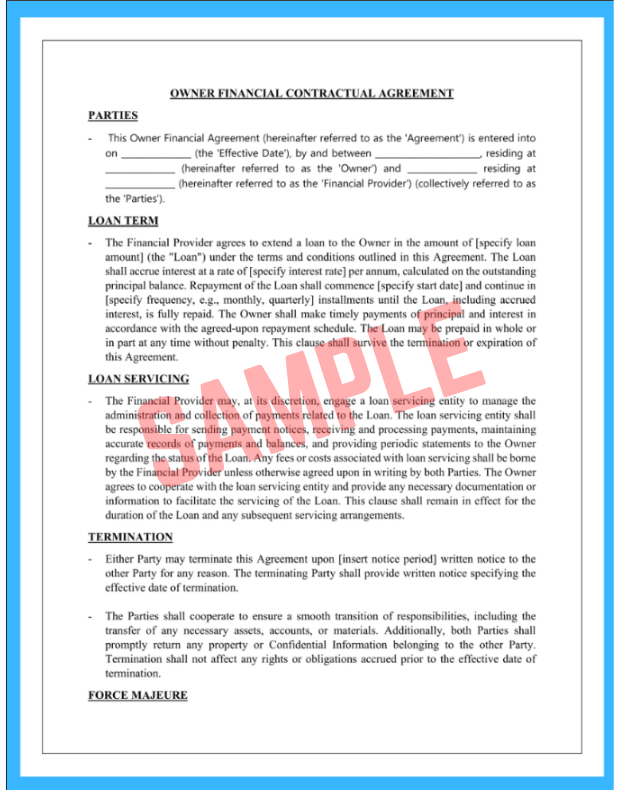
A typical owner financed business contract template will generally include the following sections:
- Agreement Date and Parties: This initial section clearly states the effective date of the agreement and meticulously identifies both the Buyer(s) and Seller(s), including their full legal names and contact information. It sets the foundation for who is entering into the contract.
- Business Description: A thorough description of the business being sold is essential. This includes the legal name, d/b/a (doing business as) name, physical address, and a list of all assets included in the sale (e.g., equipment, inventory, intellectual property, customer lists, goodwill).
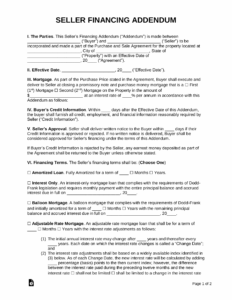
- Purchase Price and Terms: This is arguably the most critical financial section. It outlines the total purchase price, the amount of the down payment, the specific amount being financed by the seller, the agreed-upon interest rate, and the precise payment schedule (e.g., monthly principal and interest payments, balloon payments).
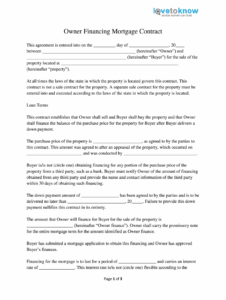
- Promissory Note: While often a separate document, the contract will refer to or include the terms of the Promissory Note. This is the buyer’s formal promise to repay the financed amount according to the agreed-upon terms, outlining payment dates, amounts, and late payment penalties.
- Security Agreement: This section details the collateral the buyer is providing to secure the seller’s loan. It specifies which business assets (and sometimes personal assets) can be claimed by the seller in case of buyer default. This protects the seller’s financial interest.
- Representations and Warranties: Both parties make specific statements about the truthfulness of certain facts. The seller typically warrants the business’s financial health and legal standing, while the buyer warrants their ability to purchase and operate the business.
- Covenants: These are promises made by both parties to do or not do certain things. Examples include the seller agreeing not to compete, or the buyer promising to maintain the business in good standing.
- Default and Remedies: This section explicitly defines what constitutes a default by the buyer (e.g., missed payments, bankruptcy) and outlines the seller’s rights and remedies in such events, such as accelerating the loan or repossessing collateral.
- Closing Date and Deliverables: It specifies the official date when the transaction will be finalized and lists all documents and actions required from both parties at closing, such as bills of sale, transfer of leases, and relevant permits.
- Governing Law: This clause indicates which state’s laws will govern the interpretation and enforcement of the contract, typically where the business operates.
- Signatures: The agreement concludes with signature lines for all involved parties, often with witness signatures or notarization, making the document legally binding.
Finding a reliable owner financed business contract template is a solid first step, but remember that templates are general. Each unique business transaction requires careful customization and legal oversight to ensure all specific nuances and state-specific regulations are met.
Owner financing offers a dynamic and flexible pathway for both buyers and sellers in the complex world of business acquisitions. It can bridge the gap between entrepreneurial ambition and financial reality, facilitating transactions that might otherwise not occur. By understanding the core advantages and the detailed components of a well-structured agreement, parties can approach these deals with confidence.
The importance of a comprehensive and legally sound contract cannot be overstated. While an owner financed business contract template provides an excellent starting point, it is imperative to seek professional legal advice to customize and review the document thoroughly. This ensures that the agreement accurately reflects the terms of the deal, protects the interests of both the buyer and the seller, and adheres to all relevant laws, paving the way for a successful and mutually beneficial business transfer.